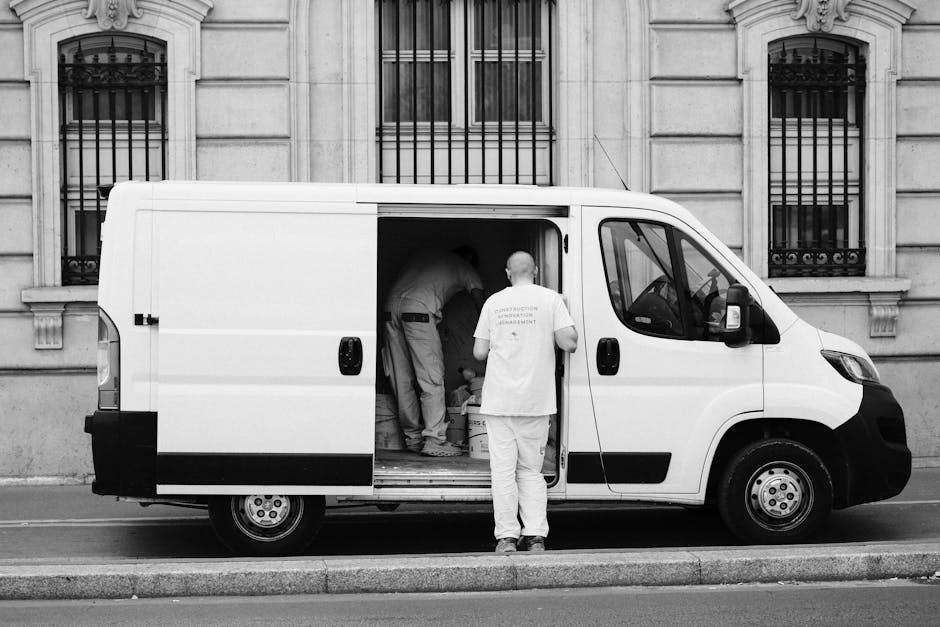
Man and van in Mayfair

Our man and van in Mayfair service is designed for straightforward home and business moves that need a careful vehicle, practical loading and tidy handling from start to finish. We move individual items, partial loads and fuller contents where a larger removal team is not necessary, keeping the work focused on safe lifting, sensible packing and well-planned transport. The aim is simple: move your belongings efficiently while keeping the process clear and manageable.
Because Mayfair includes both elegant residential streets and busy commercial addresses, the service needs to suit different access arrangements, building rules and delivery points. We work with furniture, boxes, household goods, office items and other everyday contents, with the scope shaped by what needs to travel and how it should be loaded. If you are comparing options, you can review pricing and quotes and decide what level of support feels right for the move.
For a practical, well-organised move, choose a service that keeps the route, loading order and handling method in mind. Good planning makes a noticeable difference when items need to be carried through shared entrances, lifted from upper floors or fitted around limited parking. Tell us what needs moving and where it is going, and we can shape the job around the load rather than forcing the load to suit the vehicle.
What our man and van service covers
Our main work is the movement of household and office items that benefit from a flexible van-based approach. That may include beds, tables, chairs, wardrobes, small appliances, archive boxes and mixed belongings that need loading with care rather than brute force. We can also handle short-notice item moves where one vehicle and a careful hand are enough, provided the collection and delivery details are sensible for the load.
The service can suit different move sizes, but it is especially useful when the job falls between a single-item courier and a full removal crew. If you are shifting from a flat, a townhouse or a small office, the benefit is often in the balance between capacity and agility. If you would like to understand the practical scope, see the options on our man and van removals page, which sits alongside this core service.
We do not treat every move as identical. Some jobs need protective wrapping and careful stacking; others mainly need enough space, the right carrying method and an efficient route between addresses. The key decisions are usually about item size, access and the order in which everything should be loaded. A clear description of those points helps us plan the work well and avoid unnecessary handling on the day.
Home moves, smaller relocations and part loads

Not every home move requires a large removals package. A man and van is often a sensible choice for part loads, student moves, downsizing, temporary relocations and the movement of selected rooms rather than an entire property. It can also work well when you have already arranged some of the transport yourself and only need an extra vehicle and loader for the remainder. Our home moves page explains a broader residential option for customers planning a household relocation.
Part loads are often shaped by what can be safely stacked and how breakable or awkward the items are. Flat-pack furniture, boxes of clothing, kitchenware and soft furnishings usually travel differently from mirrors, lamps, glass-topped tables or fragile decor. When the load is mixed, the order of loading matters as much as the volume itself. This is why a concise inventory is more useful than a vague estimate of how much there is.
For a residential move, useful preparation usually comes down to three things:
- grouping items by room or by how fragile they are;
- keeping walkways clear so the load-out is straightforward;
- noting anything that needs extra handling because of weight, shape or access.
Packing, lifting and careful handling
Packing support can make the difference between a move that feels controlled and one that becomes awkward halfway through. We can help with the handling of boxed contents, disassembled furniture and items that need sensible placement in the van so that they do not shift in transit. If you want a fuller preparation service, our packing and unpacking services page covers support that sits around the core move itself.
Good handling is not only about strength. It is about knowing when to use protective wrapping, when to carry an item on edge, when to split a load and when to slow down for a narrow staircase or tight hallway. That approach is especially valuable in buildings where access is shared or where doors and corners require more care than speed. Proper handling reduces avoidable scuffs, dragging and unnecessary lifting.
We also take into account the practical differences between a loose item, a boxed item and a piece of furniture that needs to be moved as a whole. A packed box may be simple to carry, but it still needs to be kept stable and arranged with heavier items lower down. A wardrobe or bed frame may take more time at the collection point, yet load more safely once it is prepared correctly. The work changes with the item, and so should the method.
Office items and commercial collections

Although many customers use a man and van for home removals, the same practical approach can work well for small business collections and office moves. Desks, chairs, monitors, storage units, archived paperwork and boxed supplies often move best when the job is organised around access and timing rather than unnecessary scale. If your business move is broader, our office removals page describes a more structured commercial service.
Commercial loads usually need a little more attention to sequence. Items may have to be collected from different rooms, side entrances or storage areas, and some may need to stay together by department or project. A straightforward van move can be an efficient way to clear space, relocate selected items or move equipment between premises without arranging a full-scale operation.
Useful commercial decisions often come down to whether the contents are light but numerous, or few but bulky. If the load is mostly folders and packed supplies, the challenge is volume and labelling. If it includes office furniture, the challenge is handling shape, weight and route through the building. Either way, a clear plan helps the move stay organised and keeps the day from becoming a scramble.
Vehicles, access and the route on the day
A van-based move works best when the vehicle choice and route are matched to the job. Some collections need a compact approach for narrow streets or restricted access, while others benefit from a larger load area for bulkier furniture and grouped boxes. The key is not to overcomplicate the transport; it is to make sure the vehicle suits the items, the access and the destination. If you are comparing vehicle options, our moving van page is a useful place to look.
Access matters just as much as carrying capacity. Lifts, staircases, basement entries, shared entrances and loading points all affect how the work is organised. A short move can become awkward if the access is tight, while a longer move can remain efficient if the loading sequence is sensible. The best results usually come from understanding where the item starts, how it needs to be carried and where it will be placed at the other end.
We also take the route into account when the move crosses central streets, commercial zones or locations with parking limits. That does not mean every job needs elaborate scheduling; it means the transport should be matched to the setting so the move feels calm rather than improvised. A well-sized van, a clear path and a sensible loading order will do more for the job than unnecessary complexity.
About Mayfair
Mayfair is one of central London’s best-known districts, lying between Hyde Park, Piccadilly, Oxford Street and Regent Street. Its layout reflects a long history of planned development, especially the 18th-century fashioning of grand squares and streets under the Grosvenor estate. The area retains that urban form today, with formal terraces, mansion blocks, embassies, hotels, private clubs and retail frontages shaping a streetscape that feels both historic and intensely metropolitan. Grosvenor Square remains a defining open space, while Berkeley Square, Hanover Square and other nearby squares help preserve the neighbourhood’s distinctive pattern of enclosed green spaces surrounded by classical architecture. Mayfair also sits close to some of London’s most recognisable institutions, including Green Park and the shopping corridor of Bond Street, and it remains closely connected to the wider West End through its streets, galleries and hospitality venues. Much of its appeal comes from the contrast between refined architecture and the pace of the surrounding city, with quieter side streets sitting only moments away from the busier thoroughfares. The area’s buildings include Georgian houses, later conversions and substantial commercial premises, so its built environment tells a layered story of adaptation rather than one single period. That mix of preserved squares, major arteries and high-value property gives Mayfair a strong identity within central London, while its network of short streets and elegant façades continues to make it instantly recognisable.
When a smaller move is the better choice
There are many situations where a full removals operation is more than you need. A man and van can be the better fit for a single room, a studio flat, a few pieces of furniture or a delivery run that involves loading at one address and unloading at another. It is also a practical option for belongings that are not enough to justify a larger vehicle but still deserve professional handling. If you need a broader range of moving support, our removal services page gives a wider view of the options available.
Smaller moves are often simpler to organise, but they still benefit from structure. Even when the load is modest, it helps to think about whether items can be dismantled, whether boxes are already packed and whether the access points are clear. These details influence the time needed, the type of vehicle chosen and the way the load should be packed. The goal is not to complicate a modest job; it is to keep it straightforward from the outset.
If you only need a handful of items moved, it can still be worth checking whether anything requires special handling. Tall cabinets, framed artwork and awkwardly shaped furniture may need more care than their size suggests. A smaller job is not necessarily an easier one unless the contents are easy to carry, simple to load and free from access issues. That is why brief, accurate job details are so useful at quotation stage.
Pricing factors and quotation details

The cost of a man and van move is usually influenced by the amount of loading, the travel distance, the time needed for access and the type of items being moved. Stairs, long carries, fragile furniture and multiple pick-up points can all affect how a job is planned. Rather than assuming one move is like another, it is better to describe the collection and delivery points clearly so that the quote reflects the real work involved.
It also helps to explain whether the contents are boxed, dismantled, stacked or still mixed together. A well-set-out list of items is more useful than a rough estimate based on room count alone, because two rooms can differ hugely in weight and complexity. If you are comparing services, you can contact us with the details of your move and ask for a quotation based on the actual load.
Useful quotation information usually includes the main items, the number of floors, whether parking is close to the door, and whether there are any delicate or unusually shaped belongings. That does not mean you need to produce a perfect inventory. It simply means the more accurate the description, the easier it is to prepare a sensible plan. A clear quote is most helpful when it mirrors the job as it will really be done.
Removal options, related services and next steps
Some customers know from the outset that they need more than one service. A house move may involve packing support, a commercial relocation may need coordinated transport, or a furniture-only job may sit alongside a wider clearance plan. In those cases, it helps to look at the supporting pages and choose the combination that matches the task rather than trying to force everything into one category. For larger domestic moves, our house removals page sets out a fuller property moving option.
We also support customers who are moving a mix of furniture and general belongings. The difference between a single-item move and a fuller household relocation often lies in preparation, not simply in the amount of space required. Once the route, load and access have been thought through, the job becomes easier to organise and easier to finish in a sensible order. A tidy process helps protect the items and makes delivery more straightforward at the far end.
Ready to arrange your move? If you want a practical man and van service in Mayfair, start by outlining the items, access and preferred timing, then request a quotation when you are ready. For a wider look at our company information and service range, our about us page is available too. Otherwise, send the details through and we will help you take the next step.